The sway bar is one of those parts most drivers never think about until the car starts feeling a little off in corners. You might notice more lean in turns, a clunk over uneven roads, or steering that feels less settled during quick lane changes. None of that automatically means something is failing fast, but it does mean the suspension may not be controlling weight transfer the way it used to.
If you understand what the sway bar actually does, it’s easier to spot when it’s helping and when it’s become dead weight.
How The Sway Bar Actually Works
A sway bar connects the left and right sides of the suspension, usually through small links at each wheel. When the car goes through a turn, the body wants to roll toward the outside of the corner. The sway bar resists that roll by transferring some of that load to the inside suspension, keeping the body flatter and the tires more evenly loaded.
It’s not there to make the ride harsh. It’s there to keep handling predictably when weight shifts. We see drivers mistake body roll for soft shocks when the sway bar hardware is the real reason the car feels loose in corners.
Why Modern Cars Rely On It More Than Older Ones
Modern vehicles are heavier and taller on average, even when they’re not full-size SUVs. Bigger cabins, more safety structure, more tech, and wider tires all change how weight moves during braking and cornering. That added mass makes body roll more noticeable, and it can make a vehicle feel sloppy if roll control is weak.
Suspensions are also tuned for comfort and stability at the same time, which is a balancing act. The sway bar helps engineers maintain comfortable ride quality while still controlling lean during turns. Without it, many vehicles would need much stiffer springs, and the ride would feel rough on everyday roads.
What You Feel When The Sway Bar Is Not Doing Its Job
A weak sway bar setup usually shows up as handling that feels less confident, especially on ramps and sweeping turns. The car may lean more than it used to, and it can feel like it takes a moment to settle after a quick steering input. Some drivers describe it as a floaty or top-heavy feeling even when the tires are fine.
Noise is another giveaway. A worn link or bushing can clunk when one wheel hits a bump and the other doesn’t, like pulling into a driveway at an angle. If the clunk is repeatable on small bumps, sway bar hardware is often a strong suspect.
Common Sway Bar Wear Points
The sway bar itself is a solid piece of metal and usually lasts a long time. The wear happens at the connection points, where movement and road grime do their work. Links have joints that can loosen, and bushings can dry out, crack, or flatten over time.
Here are the parts that most often cause trouble:
- Sway bar links that develop play and start knocking on bumps
- Sway bar bushings that wear and let the bar shift or creak
- Mounting brackets that loosen and create a dull clunk
- Rust and corrosion that accelerate bushing wear in wet conditions
This is a good place where regular maintenance pays off quietly. A quick check during routine visits can catch a loose link before it turns into a louder clunk and starts stressing other suspension parts.
Quick Checks Before You Blame The Shocks
It’s easy to assume every handling change is a shock or strut problem. Sometimes it is, but sway bar issues can mimic worn dampers in a way that throws people off. If the car feels okay on straight roads but feels messy in corners or over uneven bumps, sway bar hardware should be on the short list.
Watch for patterns. If the noise happens mostly when one side hits a bump, like the right wheel on a pothole while the left stays level, that points toward sway bar links and bushings. If the car bounces repeatedly after a bump, that leans more toward shocks or struts.
What We Look At During An Inspection
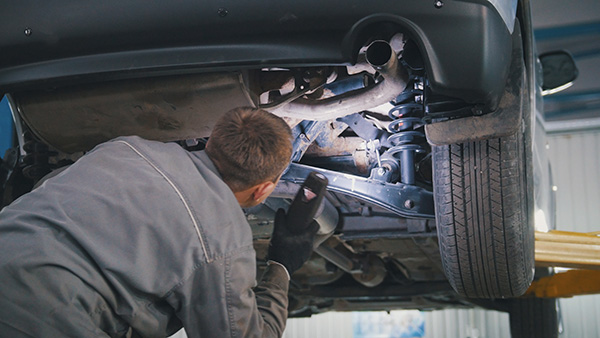
A proper inspection looks at the sway bar system as a whole, not just one part. We check for play in the links, the condition of the bushings, and whether the bar is centered and securely mounted. We also look at nearby suspension components, because a sway bar noise can be amplified by worn control arm bushings or loose hardware elsewhere.
We’ll usually recreate the noise with the suspension loaded, because some looseness only shows up under real movement. If the links are worn, the fix is often straightforward. If the bushings are the issue, replacing them and making sure the bar is properly secured often brings the solid feel back quickly.
When Replacement Makes Sense And What To Expect After
Sway bar links and bushings are common wear items, and replacing them is often a good value compared to chasing the noise for months. You’ll typically notice a tighter, more settled feel in turns and fewer clunks over uneven pavement. The biggest difference is usually confidence, especially on ramps and quick lane changes.
If the vehicle still feels loose afterward, it’s time to look more deeply at shocks, struts, alignment, or other suspension wear. The nice thing is that fixing sway bar hardware first often removes the noise and sharpens handling enough that any remaining issues are easier to identify.
Get Sway Bar Service In Walnut Creek, CA, With Roesbery Car Care Walnut Creek
Roesbery Car Care Walnut Creek in Walnut Creek, CA, can check sway bar links, bushings, and related suspension hardware to pinpoint what’s causing the lean or clunk and get it handled the right way.
Schedule a visit and get your handling feeling tight and predictable again.