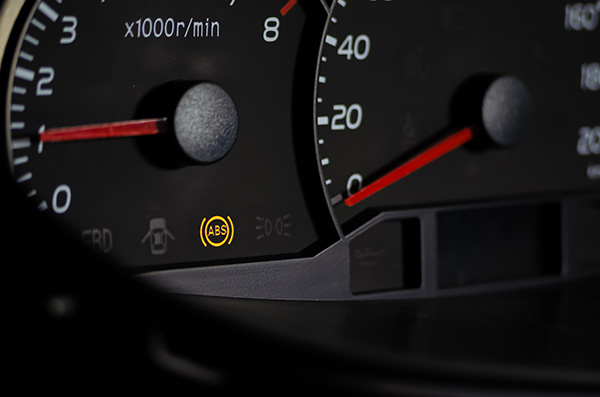
The ABS light has a way of showing up at the exact wrong time, right before a trip, during rain, or when you are already running late. The car may still stop, the pedal may feel normal, and you are left wondering if it is a minor sensor issue or a sign that the brakes are not safe.
In most cases, the ABS light indicates that the vehicle has detected a fault and may have disabled the anti-lock braking system. That does not automatically mean you have no brakes, but it does mean you should treat the situation seriously and get a clear diagnosis.
What The ABS Light Is Telling You
ABS stands for anti-lock braking system. Its job is to help keep the wheels from locking up during hard braking, especially on slick roads, so you can keep steering control while slowing down. When the ABS light comes on, the system is letting you know it cannot operate as designed, so the vehicle often turns that feature off until the problem is fixed.
It is common for the ABS light to come on by itself, but sometimes it shows up with traction control or stability lights too. Those systems share sensor data, so one bad wheel speed signal can trigger multiple warnings.
What Changes When ABS Is Disabled
Your normal braking usually still works because ABS is an add-on system, not the only braking system. You can still press the pedal and the vehicle should slow down, but if you slam the brakes hard on wet pavement, the wheels may lock up instead of pulsing.
That change matters in real driving. Locked wheels slide, and sliding reduces steering control. It can also increase stopping distance on certain surfaces, which is why it is smart to increase following distance and avoid aggressive braking until the issue is diagnosed.
Common Reasons The ABS Light Comes On
There is a short list of issues that cause most ABS warning lights. Some are simple, and some take more time to track down, which is why testing beats guessing.
- A Wheel Speed Sensor Or Wiring Issue: A sensor can fail, or the wire can get damaged near the wheel, especially after road debris, corrosion, or suspension movement.
- Rust Or Debris Affecting The Sensor Signal: Many sensors read a toothed or magnetic ring, and buildup can cause weak or erratic readings.
- A Failing Wheel Bearing: If the bearing develops play, the sensor signal can become inconsistent and trigger the ABS light even before the bearing gets loud.
- Low System Voltage: A weak battery or charging problem can create module communication errors and turn warning lights on without a hard mechanical failure.
- ABS Module Or Hydraulic Unit Problems: Less common, but possible, especially if the light comes on consistently and sensor signals check out.
We have also seen tire size mismatches cause odd wheel speed readings, so it is worth mentioning if a tire was recently replaced.
Driving Cues That Help Narrow It Down
Pay attention to whether the ABS light comes on immediately at startup or only after you start moving. If it appears after a few minutes of driving, the system may be detecting a wheel speed signal that drops out at a certain speed or during turning.
Notice any extra symptoms too. A pulsing brake pedal during normal stops is not typical and can point to a sensor signal glitch. A growling noise from one corner, a vibration that changes with speed, or a slight pull during braking can suggest a bearing or brake hardware issue that deserves a closer look.
If the ABS light comes on right after hitting a pothole or driving through heavy rain, that is useful information. Impacts can affect sensor wiring, and moisture can temporarily interfere with weak connections.
What To Do Right Now
If the ABS light is on by itself and the brake pedal feels normal, you can usually drive carefully to get it checked. Increase your following distance, avoid sudden stops, and be cautious on wet roads where ABS is most helpful.
If you see a red brake warning light at the same time, or the pedal feels soft, spongy, or requires much more effort than normal, do not keep driving. Those signs can point to a base brake problem, like low brake fluid or a hydraulic issue, and that is a different level of risk. If you smell burning near a wheel, feel the car pulling hard, or hear grinding, it is also safer to stop and get help rather than pushing it.
How A Proper ABS Diagnostic Works
A real diagnosis starts with reading the stored fault codes, then confirming the cause with live data. We typically look at wheel-speed signals from all four corners and see if any drop out, lag behind, or spike compared to the others. That can quickly point us to the wheel, sensor, or wiring that needs attention.
From there, the inspection becomes physical. We check sensor mounting, wiring routing, connector condition, and for bearing play where it should not exist. The goal is to fix the actual failure point, not just clear the light and hope it stays off. When the repair is done, we verify that the warning stays off and that wheel speed readings are stable during a test drive.
Get ABS Diagnostics in Walnut Creek, CA with Roesbery Car Care
We can scan your ABS, pinpoint why the light came on, and confirm whether the issue is a sensor, wiring, wheel bearing, or module-related fault. We’ll explain what we find and what it takes to restore the ABS feature, so you are not guessing every time you hit the brakes hard.
Call Roesbery Car Care in Walnut Creek, CA, to schedule ABS diagnostics and get your safety systems back online.