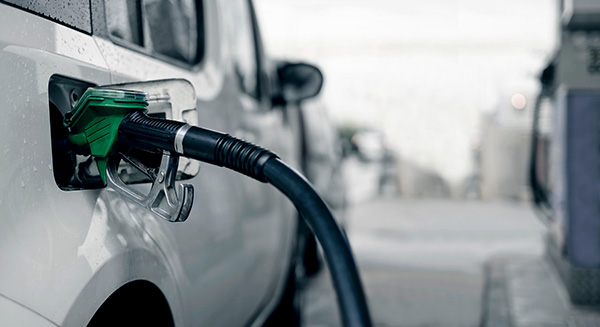
Every fuel nozzle has a built-in way to sense when your tank reaches the right level and stop the flow automatically. It is a clever mix of airflow, vacuum, and a small mechanical valve in the handle.
Knowing how it works explains early click-offs, splashback, and why topping off is not a good idea.
What The Nozzle Is Sensing
Near the tip of the nozzle, there is a tiny sensing port. While you pump, air flows past that port, up a small tube, and into a passage inside the handle. As long as the port “breathes” air, the pump keeps running. When rising fuel covers the port, airflow changes. That change is the nozzle’s signal that the tank has reached the designed fill level.
The Venturi Vacuum And Shutoff Mechanism
Inside the handle, fuel rushing through a narrow passage creates a Venturi vacuum. That vacuum draws air from the sensing tube. When liquid blocks the port, the vacuum increases sharply. A small diaphragm in the handle reacts to that change and trips a latch that snaps the trigger closed. The result is that familiar click at the exact moment the filler neck is full enough for safe expansion space.
Why It Sometimes Clicks Off Too Early
If the sensing port meets foam instead of solid liquid, it can think the tank is full and stop the flow. High pump flow, certain gasoline blends, or a nozzle inserted at an awkward angle can create more foam than usual. A partially kinked filler neck or a tight bend in a flexible section slows venting in the tank, so returning vapor cannot escape quickly. The nozzle sees that slowed airflow as a “full” signal and shuts off, even though the gauge will later show less than full.
How Your Vehicle Helps: ORVR And Filler Design
Modern cars use Onboard Refueling Vapor Recovery. As fuel enters, vapors are routed to a charcoal canister and back to the tank after refueling. The filler neck, vent paths, and rollover valves are designed so liquid stays where it belongs and vapor has a clear route out. When the canister is saturated or a vent line is pinched, vapor flow backs up. The nozzle’s sensing port then sees liquid or heavy vapor where it expects air, which leads to repeated click-offs during a fill.
Best Practices For Clean, Quick Fill-Ups
- Insert the nozzle fully and support it so the tip points slightly upward, which helps foam move away from the sensing port.
- If the pump has selectable speeds, choose the middle setting to reduce foaming and splashback.
- Stop at the first automatic click. Extra squeezes push liquid into the vapor path and the charcoal canister.
- If the nozzle clicks off immediately, rotate it a few degrees or pull it back a half inch and try again.
When The System Can Misread The Tank
Very hot days expand fuel and vapors in the tank. If you begin filling right after a long, hot drive, the nozzle may shut off early because pressure is already high in the filler neck. Cold mornings can do the opposite, making fill rates seem slow. Parking on a steep angle can tilt the filler neck so the sensing port submerges sooner than expected. In each of these cases, slowing the flow and holding the nozzle at a slightly different angle usually restores a normal fill.
Signs You Should Have A Technician Check The Evap System
Repeated early click-offs at every station, strong fuel smell after fill-ups, or a check engine light tied to evaporative leak or purge flow codes point to a venting problem. A stuck purge valve, a saturated charcoal canister, or a pinched vent hose can all confuse the nozzle and waste time at the pump. A simple smoke test and valve check will confirm the cause and keep fuel where it belongs.
Keep Refueling Simple And Safe With Roesbery Car Care In Walnut Creek, CA
If fill-ups are slow, the nozzle keeps clicking off, or you notice fuel odors after refueling, our technicians can inspect the filler neck, vent paths, purge valve, and charcoal canister. We verify the system breathes correctly, so pumps shut off at the right moment without splashback or false stops.
Schedule a visit with Roesbery Car Care in Walnut Creek, CA, and make every stop at the pump quick and clean.